Saturday, November 26, 2011

MORDECHAI RUMKOWSI

Mordechai Chaim Rumkowski


Rumkowski.jpg
Mordechai Chaim Rumkowski (February 27, 1877 - August 28, 1944) was a Polish Jew and functioned as the German Nazi-nominated head of the Ältestenrat ("Council of Elders"), or Jewish authorities in the Łódź Ghetto. Before the Nazi Germaninvasion of Poland, Rumkowski was a businessman and director of an orphanage. On October 13, 1939, the Nazi occupation authorities appointed him the Judenälteste ("Elder of the Jews"), or head of the Ältestenrat, in Łódź. In all other ghettos, the head of the Jewish council was known as the Judenrat. In this position he reported directly to the Nazi ghetto administration headed by Hans Biebow and had direct responsibility for providing heat, work, food, housing, and health and welfare services to the ghetto population. He performed marriages when rabbis had to stop working, his name came to serve in the nickname of the ghetto's money, the Rumki, sometimes Chaimki,[1] and his face appeared in the ghetto postage-stamps.[2]
Some remember him for his haunting and tragic speech, Give Me Your Children.


Rumkowski and his family voluntarily joined the last transport[3] to Auschwitz, and were murdered there August 28, 1944. A family friend (in 1944 a teenaged resident of Łódź ghetto) suggests the possibility Jewish inmates murdered him.[4]

[edit]Background and history

Rumkowski testing soup
The well-known Judenrat member Chaim Rumkowski was a controversial figure due to his leadership role in the Łódź ghetto during the Holocaust. During World War II, the Germans forced the Jewish community to form Judenräte, or "Jewish Councils," in each ghetto in the incorporated territory and the General Government regions of occupied Poland. The Judenräte acted as the local government of the ghetto; these leaders stood as the bridges between the Nazis and the caged population of each ghetto. In addition to running basic government services such as hospitals, post offices, and vocational schools, common tasks of the Judenräte included providing the Nazi regime with Jewish residents for slave labor, and the hardest task of all, rounding up quotas of Jews for "resettlement in the East", a euphemism for deportation to concentration and death camps.
Rumkowski dealt with the difficult task of being Judenrat leader in a very disputable way. Upon learning of the "Final Solution" and the real meaning of "resettlement", Adam Czerniaków, the head of the Judenrat of Warsaw, took his own life. Rumkowski, on the other hand, had a different approach. He was swayed by the slogan "Arbeit macht frei - Work sets you free" that appeared on the gates of several concentration camps. By industrializing the Łódź ghetto, he hoped to make the community indispensable to the Germans and save the people of Łódź. On April 5, 1940, Rumkowski petitioned the Germans for materials for the Jews to manufacture in exchange for desperately needed food and money. By the end of the month, the Germans had acquiesced in part, agreeing to provide food, but not money, in exchange for the labor.[5]
Rumkowski's plan also included making the ghetto more community-like, flourishing with work, schools, hospitals, mail delivery system, and other communal necessities. He believed in creating a ghetto in which it embodied a community of Jewish culture and nationalism. However, although these goals seemed lofty and benevolent, many people remember him very differently. For example, in the memoirs of Yehuda Leib Gerst, he writes: "This man had sickly leanings that clashed. Toward his fellow Jews, he was an incomparable tyrant who behaved just like a Führer and cast deathly terror to anyone who dared to oppose his lowly ways. Toward the perpetrators, however, he was as tender as a lamb and there was no limit to his base submission to all their demands, even if their purpose was to wipe us out totally. Either way, he did not properly understand his situation and positing and their limits."[6]
Whether or not Rumkowski succeeded in saving the Łódź ghetto is open to debate. Łódź was the last ghetto in Eastern Europe to be liquidated.[7] While only 877 inhabitants survived in the city until liberation, about 7,000 ghetto residents lived to see the end of the war. Rumkowski's methods are still debated by scholars and historians, who disagree on whether he was a Nazi collaborator or sincerely trying to help the Jews of Łódź.
Research done by Isaiah Trunk on the Jewish Councils under Nazi occupation in his work Judenrat revises the view of the Judenräte, and specifically of Rumkowski, as traitors.[8] Arnold Mostowicz, who once lived in the Łódź ghetto, justifies Rumkowski’s policies in his memoirs, saying that Rumkowski prolonged the ghetto's existence by two years, allowing more people to have survived from Łódź than from Warsaw. He concludes, "This is a horrific reckoning, but it gives Rumkowski a posthumous victory".[9] He is described in two very different lights:
...aggressive, domineering (person), thirsty for honor and power, raucous, vulgar and ignorant, impatient (and) intolerant, impulsive and lustful. On the other hand, he is portrayed as a man of exceptional organizational prowess, quick, very energetic, and true to tasks that he set for himself.[10]
SS Brigadier General Friedrich Uebelhoer, on September 8, 1939, began the ghettoization of Łódź. The top secret report stated clearly that the ghetto was only a temporary solution to "the Jewish question in the city of Lodz..." "I reserve to myself the decision concerning the times and the means by which the ghetto and with it the city of Łódź will be cleansed of Jews".[11] Uebelhoer made the condition that they would provide for the Jews as long as suitable trade could be made, but never implied long-term survival. The Germans immediately replaced the local Jewish Community Council with the Nazis' official Judenrat, or Council of Elders. Rumkowski was appointed head of the Łódź ghetto on October 13, 1939[12]. The ghetto was sealed on April 30, 1940 with 164,000 people inside. He reported directly to the Nazi ghetto administration headed by Hans Biebow, who had the responsibility of overall living conditions of the ghetto, including housing, heating, work, and food (Yad Vashem). Franz Schiffer, the mayor, in a letter to Rumkowski wrote:
I further charge you with the execution of all measures...necessary for the maintenance of an orderly community life in the residential district of the Jews. In particular you have to safeguard order in economic life, food supply, utilization of manpower, public health, and public welfare. You are authorized to take all measures and issue all directives necessary to reach this objective, and to enforce them by means of the Jewish police under your control...[13]
On October 16, 1939, Rumkowski appointed thirty-one public figures to create the council, however, less than three weeks later, on November 11, twenty of them were murdered and the rest were arrested. Some claim that Rumkowski was indirectly responsible for these murders, claiming he complained about them to German authorities "for refusing to rubber-stamp his policies." This accusation, although never proven, shows the discontent and mistrust they had for Rumkowski, at such an early stage of the war. Because of the events that had transpired with the first round of Judenrat, many people feared such public positions. Although a new council was officially appointed a few weeks later, they were not as distinguished and less effective than the previous leaders. This gave Rumkowski full leadership and power, and left few to contest or restrain his decisions [14]

[edit]Prior to the "Final Solution"

Even though the Germans, clearly, were the ones who gave Rumkowski authority, he was still the "sole figure authority in managing and organizing internal life in the ghetto".[15] Rumkowski's power was due to the Nazis, in conjunction with his dominant personality, and the lack of a forceful council.[16] Biebow, at first, gave Rumkowski full power in organizing the ghetto, as long as it did not interfere with his main objectives; complete order, confiscation of Jewish property and assets, coerced labor, and his own personal gain.[17] Their relationship seemed to work perfectly. Rumkowski had more space to organize the ghetto according to his fashion, believing he was creating a better ghetto life, while Biebow sat back, reaped rewards, and had Rumkowski do all the dirty work.[18] In trying to keep Biebow happy, he obeyed every order with little inquiry, provided him with gifts and personal favors. Of his willingness to cooperate with the German authorities, Rumkowski is said to have boasted in a speech "My motto is always to be at least ten minutes ahead of every German demand."[19]
Token money in the ghetto with Rumkowski's signature
Because of the confiscation of cash and other belongings, Rumkowski proposed the idea of a new form of currency specifically for the ghetto - the ersatz. This new currency would be used as money, and using this alone, a person could buy food rations and other necessities.[20] This proposal was considered arrogant and illustrated Rumkowski’s lust for power. The currency was, therefore, nicknamed by ghetto inhabitants as the "Rumkin".[21] It also dissuaded smugglers from endangering their lives to get in and out of the ghetto.
This was all because Rumkowski felt that full cooperation with the Nazis would improve their chances of survival. He also felt that smuggling would "destabilize the ghetto with regard to the prices of basic commodities".[22] He needed to have full control of the ghetto economy. This further showed his arrogance.
Rumkowski was extremely serious about his position as Judenrat. He admitted to being a "Communist and a Fascist," confiscating property and businesses that were still being run by private owners. "He began to organize and take over all areas of life".[23] This was very difficult to do. He had to build everything on his own - all from within the confining walls of the ghetto. With the help of his assistants, he maintained order and established numerous departments and institutions that dealt with all of the ghetto's internal affairs, from housing tens of thousands of people, to distributing food rations.[24]Welfare and health systems were also set up. They formed seven hospitals, seven pharmacies, and five clinics, employing hundreds of doctors and nurses. Although it was a great effort, many people could not be helped due to the shortage of medical supplies allowed in by the Germans.
Rumkowski worked extremely hard to establish an education system. Forty-seven schools were in service, schooling 63 % of school-age children. There was no education system in any other ghetto as advanced as Łódź.[25] He even "intervened and imposed his control in fields outside the realm of those essential to survival." For example, he set up a "Culture House," where cultural gatherings, including plays, orchestra, and other performances could take place. He was very involved in the particulars of these events, involving himself with hiring and firing performers and editing the content of the shows.[26] He, as well, became integrated in religious life. This integration deeply bothered the religious public. For example, since the Germans disbanded the rabbinate in September 1942, Rumkowski began conducting wedding ceremonies, altering the marriage contract (ketubah).[27]
Although there were negative feelings toward Rumkowski, he still managed to build a strong establishment and organized industry in Łódź, in a relatively short period. Because of this order, more efficient and fair distribution of rations and other services could take place. He believed that any decisions to be made, were best made by himself, without consulting anyone.
"...he understood everything best and that only his way was correct and just... He treated the ghetto Jews like personal belongings. He spoke to them arrogantly and rudely and sometime beat them".[28]
Due to Rumkowski's harsh treatment, and stern, arrogant personality, the Jews began to blame him, and unleashed their frustration on him, instead of the Germans, who were beyond their scope of blame.[29] The most important display of this frustration was a series of strikes and demonstrations between August 1940 and spring of 1941. Led by activists and leftist parties against Rumkowski, they abandoned their work and went to the streets handing out fliers:
...Brothers and sisters! turn out en masse to wipe out at long last, with joint and unified force, the terrible poverty and the barbaric behaviour of the Kehilla representatives toward the wretched, exhausted, starved public... The slogan: bread for all!! Let's join forces in war against the accursed Kehilla parasite...
Rumkowski would not allow these demonstrators to get away easily. With the help of the Jewish police, they violently dissolved them. On occasion, the Nazis themselves came in to break up the commotion, which usually resulted in murder. The leaders of these groups were punished by not being allowed to work, which in effect meant that they and their families were doomed to starvation. Sometimes the strikers and demonstrators were arrested, imprisoned, or shipped off to labor camps.[30] By the spring of 1941, almost all opposition to Rumkowski had dissipated.
Rumkowski implemented industry into the ghetto from the very beginning. Because most of the Jews in the ghetto were of lower classes, laboring for the Germans was the only means of supporting themselves. In the beginning, the Germans were unclear of their plans for the ghetto, for the arrangements for the "Final Solution" were still being processed. For that reason, the first few months the Nazis had no motive to help the ghetto out with Rumkowski's labor agenda. However, once they realized, by the summer of 1940, that their original plan of liquidizing the ghetto by October 1940 could not take place, they began to take Rumkowski's labor agenda seriously [31] Forced labor became a staple of ghetto life, with Rumkowski running the effort. His slogan, "Labor Is Our Only Way" defined his belief. He said in a speech on February 1, 1941:
...I accepted the role of leading normal life at any price. The goal will be attained primarily by full employment. Therefore, my principal slogan was to provide work for as many people as possible...[32]
He, without a doubt, believed that work would save them. In another speech he said, "...Work is my coin... In another three years the ghetto will be working like a clock...".[33] "By the end of 1941, labor not only covered the costs of the ghetto's upkeep but also generated huge profits for the Germans".[34]

[edit]Debate over Rumkowski's role in the Holocaust

Due to his active role in the deportations and his iron rule, Rumkowski's behavior remains a topic of bitter debate.
Some historians and writers see him as a traitor and as a Nazi collaborator. In all his activities, Rumkowski displayed great zeal and organisational ability, becoming increasingly dictatorial. Within the ghetto, Rumkowski overcame opposition with the aid of Nazi intervention. His attempts to satisfy all Nazi demands and to set up a model ghetto earned him comments such as "a man sick with megalomania", "King Chaim", "an old man of 70, extraordinarily ambitious and pretty nutty". His 'rule', unlike the leaders of other ghettos, was marked with abuse of his own people. He and his council had a comfortable food ration, and their own special shops. The suffering of his 'comrades' was beneath him. He was known to get rid of those he personally disliked by sending them to the camps. On top of this, he sexually abused vulnerable girls under his charge.[35][36] Failure to succumb to his abuse meant death to the girl, as Lucille Eichengreen, who claims to have been abused by him for months as a young woman working in his office, testifies to:
"I felt disgusted and I felt angry, I ah, but if I would have run away he would have had me deported, I mean that was very clear."[36]
Others say that Rumkowski believed that some proportion of the ghetto would survive if they worked for the Nazis. They argue that Rumkowski believed that in order to save the majority of people, they had to cooperate with the Nazis' deportation demands. (Such a move would have immediately set him at odds with Orthodox observant Jews, as there is no justification for delivering anyone to certain death.) Following the setting up of the extermination camp at Chełmno in 1941, the Nazis forced Rumkowski to organize a deportation. Rumkowski claimed that he tried to convince the Nazis to cut down the number of Jews required for deportation and failed. Nevertheless, an estimated number of 5,000 to 10,000 Jews gave him some credit for their survival, and the Łódź ghetto lasted longer than other such establishments in occupied Poland. The Łódź ghetto was also the only ghetto not controlled by the SS.
It remains unclear whether, if he had survived the war, Rumkowski would have received thanks for saving the people he did, or a jail-term for allowing so many to go to their deaths. Primo Levi, an Auschwitz survivor, in his book, The Drowned and the Saved, gives considerable consideration to Rumkowski concluding that we forget that "we are all in the ghetto, that the ghetto is walled in, that outside the ghetto reign the lords of death, and that close by the train is waiting." At best, Levi viewed Rumkowski as morally ambiguous and self deluded. Conversely, Hannah Arendt, in her book Eichmann in Jerusalem, was scathing in her opinion of Rumkowski.

[edit]Give Me Your Children

Rumkowski's "Give Me Your Children" speech pleaded with the Jews in the ghetto to give up children of ten years of age and younger, as well as the old and the sick, so that others might survive.[37] Some commentators see this speech as exemplifying aspects of the Holocaust.
“A grievous blow has struck the ghetto. They are asking us to give up the best we possess - the children and the elderly. I was unworthy of having a child of my own, so I gave the best years of my life to children. I've lived and breathed with children, I never imagined I would be forced to deliver this sacrifice to the altar with my own hands. In my old age, I must stretch out my hands and beg: Brothers and sisters! Hand them over to me! Fathers and mothers: Give me your children!

Friday, November 18, 2011

LOVE AND TIMES OF LILI ST CYR

Love and times of Lili St. Cyr 
 
by KRISTIAN GRAVENOR
Lili St. Cyr, the American stripper who spent much of the '50s blowing minds in our fair burg, was the quintessential Montreal sexpot, the predecessor, the template for every sizzlin' Montreal mama since - no small feat in a city that boasts the most luscious women on Earth.
I recently unpried the lips of an old-time insider to get him to fess up on the secrets he promised to take to his grave, mainly about who was knockin' boots with the fleshy legend.
But first some historical context: in that era the city was run by wiseguys and was a lot more navigable if you knew who's who, the networks and hierarchies of gangsters and showbiz types. Below are some of the era's key players, although none exactly played Lili.
There's Rocky Pearson, the ingenious head of a bank robbing crew that'd hide in banks all weekend and drill through walls. One day he went missing. His mom, a gentlehearted schoolteacher, knocked on doors around Mont-Royal and Parc looking for him. Alas, his own crew had him killed.
The tougher breed included the Matticks boys, who once, according to legend, robbed a truck by pulling in front of it with another truck loaded with heavy artillery. They flipped the doors open and unveiled weaponry directed at the driver, who wisely walked away.
There's Johnny McGuire, a Hollywood-handsome rising independent criminal, one of eight brothers from Goose Village, the since-demolished gangster-incubator in the Pointe. McGuire wed the stepdaughter of mobster-on-the-skids Harry Ship, in a sort of royal union of crime families. Divorce quickly ensued and McGuire became a dope fiend small-fry moocher and died of cancer, aged 55, in 1984.
At the top sat Vic Cotroni. Unlike recently deceased little brother jailbird Frank, Vic rarely went to prison. He had the aura, too. My dad once had a blue raincoat that he says Cotroni left in his office. Just wearing it makes you feel important. When the first remote car starters came out they seemed to be marketed to gangsters who worried of car bombs. One of the first was marketed by Victronics, assumed to be named for Vic Cotroni. In fact Victronics is Chilean.
Irving Ellis owned the buildings that housed gambling joints and he served as go-between for Duplessis and the mob. He also hooked up a lot of local Jewish gangsters whose descendants are now among the city's most respectable citizens.
Good-looking strongarm Jimmy Orlando played defence for the Detroit Red Wings and would think nothing of playing with blood flowing from head gashes. He was linked with St. Cyr but was actually just a beard. A beard is a guy you hire to masquerade as your mistress's boyfriend.
While watching a playoff game at the Forum, Orlando witnessed the seminal event of the Rocket Richard riots, in which a fan slapped NHL Commissioner Clarence Campbell. Orlando, sitting nearby, rushed to the Commissioner's defence by extracting many of the assailant's teeth with his fists. Orlando later married wrestling promoter Eddie Quinn's daughter and fathered a pair of children, one of whom runs a motorcycle racing school in Colorado.
Al Palmer, city columnist and nightclub frequenter, was also intimate with St. Cyr. So much so that when local reporter Alan Hustak got St. Cyr on the buzzer just prior to her death in '99, she imagined it to be the long deceased Palmer. Nope. "Too bad," said St. Cyr. "Palmer was the best fuck I ever had." Palmer was also in love with St. Cyr.
Alas, St. Cyr's attentions belonged to Quinn, a devout Catholic and family man who'd sneak into her chambers after wifey was asleep. Quinn was instrumental in bringing the zany characters to wrestling, which he did from '39 until his death in '65. He was a homelier version of Carl Malden. St. Cyr and Quinn, a beauty-and-the-beast scenario to give hope to ugly guys all over.

Tuesday, November 15, 2011

BACK THEN

Svinin_Pavel_Petrovich_Albany_New_York.jpg


Svinin_Pavel_Petrovich_An_Osage_Warrior.jpg


Svinin_Pavel_Petrovich_A_Philadelphia_Anabaptist_Immersion_During_A_Storm.jpg


Svinin_Pavel_Petrovich_Black_Methodists_Holding_A_Prayer_Meeting.jpg


Svinin_Pavel_Petrovich_Centre_Square_And_The_Marble_Water_Works_Philadelphia.jpg


Svinin_Pavel_Petrovich_Moravian_Sisters.jpg


Svinin_Pavel_Petrovich_New_York_City_And_Harbor_From_Weehawken.jpg


Svinin_Pavel_Petrovich_Niagara_Falls.jpg


Svinin_Pavel_Petrovich_Niagara_Falls_Canadian_Side_By_Moonlight.jpg


Svinin_Pavel_Petrovich_Philadelphia_From_Across_The_Delaware_River.jpg


Svinin_Pavel_Petrovich_Shad_Fishermen_On_The_Shore_Of_The_Hudson_River.jpg


Svinin_Pavel_Petrovich_Steamboat_Travel_On_The_Hudson_River.jpg


Svinin_Pavel_Petrovich_The_Chief_Of_The_Little_Osages.jpg


Svinin_Pavel_Petrovich_The_Monument_To_Alexander_Hamilton_At_Weehawken.jpg


Svinin_Pavel_Petrovich_The_New_City_Hall_New_York.jpg


Svinin_Pavel_Petrovich_The_Packet_Mohawk_Of_Albany_Passing_The_Palisades.jpg


Svinin_Pavel_Petrovich_Travel_By_Stagecoach_Near_Trenton_New_Jersey.jpg

THE GREAT DEPRESSION

Rare color photos of Depression Era


Rare Depression Era Photos in Color


Rare Depression Era Photos in Color

Rare Depression Era Photos in Color


Rare Depression Era Photos in Color


Rare Depression Era Photos in Color


Rare Depression Era Photos in Color

Monday, November 14, 2011

CHALKY WHITE

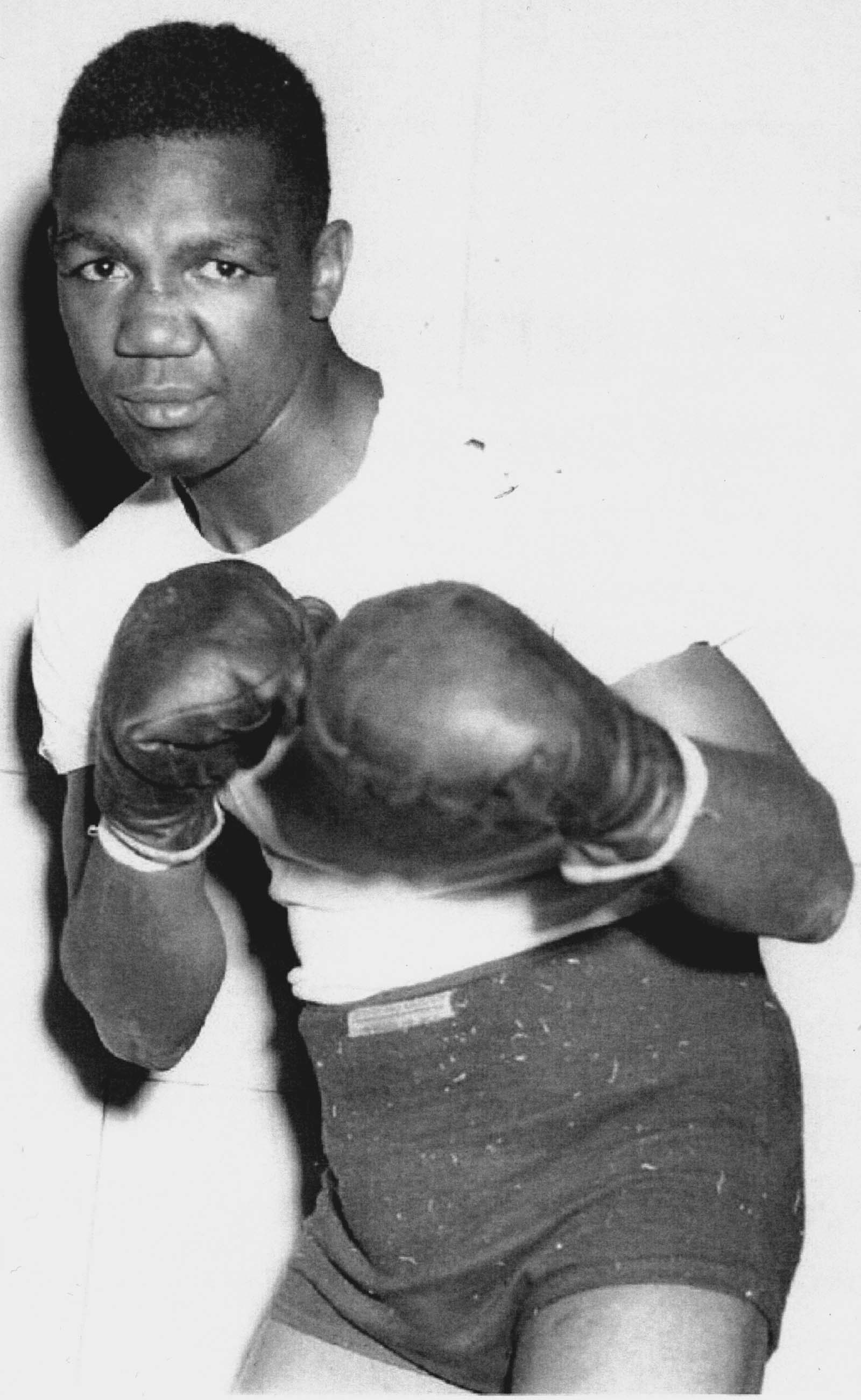
Chalky White (a character in "Boardwalk Empire") is loosely based on real-life Albert Chalky Wright who was born in Mexico on February 10, 1912.  He became an American featherweight boxer, and world champion, who fought between 1928 and 1948. 

Ring Magazine listed Chalky Wright as one of the top 100 greatest punchers of all time.  Wright's career included 158 wins (77 by knock out) and 43 losses.  He also fought to 17 draws.
Mae West, the actress, helped Chalky Wright achieve his potential.  For awhile, he served as West's chauffeur, but she encouraged him to return to the boxing ring.
By 1941, Chalky had achieved his dream:

In the early 1940s, West was one of Hollywood's wealthiest women.  Her wise land investments earned tremendous returns.  Years of backing Chalky Wright paid off when he became the world featherweight champion in 1941.  (West compelled Morrie Cohen to override the racism against black boxers and arrange the match).  (Mae West: An Icon in Black and White, by Jill Watts, page 242.)

Although the fictional Chalky White was known as the mayor of Atlantic City's Chicken Bone Beach, that description did not apply to the real Chalky. 

Like other boxers, in the waning days of their careers, his championship status did little to help him financially.  Listed in "Jet" magazine's November 8, 1951 edition as a "has-been of boxing," Wright was included with "some of the most illustrious name-fighters of all time" who had money troubles:

Chalky Wright, former featherweight champion, who now lives as a fighter's second in Los Angeles.  A Maryland attorney recently pleaded for Wright for a $1,000 purse help up several years ago by the boxing commission of that state.  He claimed Wright was "destitute."  ("Jet," November 8, 1951, at pages 52-53.)

Even Muhammad Ali paid tribute to Chalky as one of the world's best fighters:

Angelo kept telling me, "You're not like any of them old fighters."  I know better.  Who I am is just what those who came before me made it possible for me to be.  Just ahead of me were some of the best fighters the world ever saw, like Joe Louis, Sugar Ray Robinson, Henry Armstrong, Archie Moore, Johnny Bratton, Kid Gavilan, Sandy Saddler, Jersey Joe Walcott, Ezzard Charles, Floyd Patterson, Chalky Wright ... and others who had new styles and powerful punches.  (Elliott J. Gorn, quoting Ali, in Muhammad Ali, the People's Champ, atpage 79.)

Later in his life, using the pen name Jay Thomas Caldwell, Chalky wrote a book about himself entitled Me an' You.  He died in Los Angeles, in 1957, after slipping in a bathtub.
The International Boxing Hall of Fame provides more background on Chalky Wright:
Albert (Chalky) Wright's career is a lesson in perseverance.  Although he battled the best fighters in the world for more than a decade, it wasn't until his 139th pro fight that he earned a title shot.

When that opportunity presented itself - Wright took full advantage.

Born on February 10, 1912 in Durango, Mexico, Wright turned pro two weeks after his 16th birthday and scored a four-round win over Nilo Balles.  He spent the early part of his career campaigning in Southern California and learned his craft as he progressed.

Wright never shied from quality competition and fought bantamweight contenders Newsboy Brown and Pablo Dano, ex-champ Baby Arizmendi, featherweight contender Al Reid and three-division champ Henry Armstrong en route to the crown.

It wasn't until he began fighting on the East Coast in 1938 that the boxing world took notice of Wright, who at 5-7 1/2 was unusually tall for a featherweight.  He utilized his long reach and packed considerable power for a 126-pounder.  By 1941, Wright was ranked among the top featherweights in the world and secured a title fight by decisioning future champion Sal Bartolo.

On September 11, 1941, nearly 14 years after he turned pro, Wright knocked out Joey Archibald in the 11th round to win the world featherweight title.  Less than a month after winning the title, Wright engaged in two tough non-title fights, losing to top contender Jose Peralta and decisioning former champ Leo Rodak.

In 1942, Wright knocked out future 126-pound champion Richie Lemos and then made successful title defenses against Harry Jeffra (KO 10) and Lulu Constantino (W 15).  But by year's end, Wright lost his crown via decision to Willie Pep, one of boxing's all-time greats.  It has been said the first Pep-Wright encounter inaugurated the featherweight division's Golden Era.

Wright challenged Pep for the title in 1944 but lost another decision.   He would also drop two non-title contests to the legendary Pep.  Among the other champions Wright fought were Phil Terranova (KO 5), Jackie Wilson (W 10, NC 7) and Johnny Bratton (W 10).   He finally retired, a veteran of 201 bouts in a career that spanned 20 years, in 1948.


Wright died tragically on August 12, 1957 in Los Angeles after slipping in the bathtub.

FEMME FATALE

imgTag

RAY CHARLES: LOOKING BACK

As his 80th birthday approaches, a look at the life and legacy of the late Ray Charles.


"I just do what I do." That's what Ray Charles told Billboard in June 2002 when asked to assess his role in music history. Of course, Charles' self-effacing response belies a groundbreaking career and a legacy that endures today, as fans look toward celebrating what would have been the legendary artist's 80th birthday Sept. 23. Looking back at Charles' storied career, what comes to mind is the phrase "musical genius." In Charles' case, that's no hype.


Rare & Unseen Ray Charles Photos | Charles on the Charts

80th Birthday Year Events | Charles Charity


In 1954, the artist's melding of gospel and blues yielded the pioneering hit "I've Got a Woman"-and forged an indelible imprint on R&B, rock and pop. His earthy, soulful voice graced a steady stream of classics after "Woman," including "Drown in My Own Tears," "What'd I Say," "Hit the Road Jack," "Unchain My Heart," "I Can't Stop Loving You" and "Georgia on My Mind."

Video below: Ray Charles performs "Hit The Road Jack" in São Paulo, Brazil on September 22, 1963.


Video below: Ray Charles performs "Then I'll Be Home" in Montreux, Switzerland on July 19, 1997.


Just as at home on the Hammond B-3 organ as he was on the piano, he also landed at the top of Billboard's R&B, pop, country and jazz charts-and even the dance chart, collaborating with childhood friend Quincy Jones and Chaka Khan on "I'll Be Good to You."

His final recording, 2004's "Genius Loves Company," made history when it won eight Grammy Awards, including album and record of the year for his pairing with Norah Jones on "Here We Go Again."

But what many may not know is that the inimitable Charles was also a genius when it came to the business side of music. In the early '60s he negotiated a rare feat after leaving Atlantic Records to sign with ABC-Paramount: ownership of his own master recordings. He also established his own labels. Tangerine (his favorite fruit) came first, which later evolved into CrossOver Records.

A songwriter who penned nearly 200 songs, Charles also operated his own publishing companies, Tangerine Music and Racer Music. For these entities, Charles and longtime manager Joe Adams designed and built the RPM International office and studios on Washington Boulevard in Los Angeles. The Ray Charles Memorial Library will open in the building this fall.

Charles also found time to manage the careers of other acts, including Billy Preston and '70s R&B group the Friends of Distinction. And way before it was de rigueur for artists to do, Charles set up what became a foundation to help needy children with hearing disabilities and later on support education.


He was an amazing human being," says Jones, 77, who became friends with Charles when both were scrappy teenagers in Seattle. "A true innovator who revolutionized music and the business of music," he adds. "Growing up, we only had the radio; no Michael Jackson, Diddy or Oprah. So it was hard to imagine today's entrepreneurial world. But that didn't stop us. We spent a lot of time talking and dreaming about things that brothers had never done before."

"He really was a genius," says singer Solomon Burke, a former Atlantic labelmate. "He did things the way he wanted."

Charles was born Ray Charles Robinson Sept. 23, 1930, in Albany, Ga. As many learned through actor Jamie Foxx's Academy Award-winning portrayal in the 2004 film "Ray," Charles became blind by age 7 and orphaned at 15 while growing up in northwest Florida.

In eight years at a state school for the blind, the young Charles learned how to read and write music. Leaving Florida in 1947, he headed for Seattle ("Choosing the farthest place he could find from Florida," Jones says), where he notched his first hit two years later as a member of the Maxin Trio, "Confession Blues."

Even then, Charles was an enterprising individual. "He had his own apartment, record player, two pairs of pimp shoes, and here I am still living at home," Jones recalls with a laugh. "His mother trained him not to be blind: no cane, no dogs, no cup. His scuffed-up shoes... that was his guide and driving force. He was the most independent dude I ever saw in my life. Ray would get blind only when pretty girls came around."

Signing with Atlantic Records in 1952, Charles as a West Coast jazz and blues man recorded such songs as "It Should've Been Me" and label co-founder Ahmet Ertegun's composition, "Mess Around."

Then he connected in 1954 with "I've Got a Woman," which set off a chain reaction of more hits capitalizing on his bold gospel/blues fusion. But Charles was just getting started. In 1958, he performed at the Newport Jazz Festival, accompanied by a band that featured such jazz cats as saxophonists David "Fathead" Newman and Hank Crawford. Further bucking convention, he recorded "The Genius of Ray Charles," a 1959 release offering standards on one side (including "Come Rain or Come Shine") and big band numbers on the other, featuring members of Count Basie's orchestra and several arrangements by Jones.


Video below: Charles' 1966 Coke commercial, "So Tired."


Leaving Atlantic for ABC-Paramount, a fearless Charles recorded the seminal "Genius + Soul = Jazz" album in 1961. A year later, his earlier dabbling in country music grew serious with the release of the million-selling "Modern Sounds in Country and Western Music."

Complemented by lush strings and a harmony-rich choir, he scored with covers of Don Gibson's "I Can't Stop Loving You" and Ted Daffan's "Born to Lose"-and spent 14 weeks at No. 1 on the Billboard 200.


For a black man to do this in 1962 was unheard of," says Tony Gumina, president of the Ray Charles Marketing Group, which handles the late artist's licensing affairs. "He was trying to sell records to people who didn't want to drink from the same water fountain as him. But this was one of his greatest creative and business moves: to not be categorized musically and cross over. Though he never worried about it, he was resigned to the fact that he might lose some core fans. But he thought he'd gain far more in the process."

Gumina was operating his own promotion company working with state lotteries when he met Charles in 1999. The two teamed up on a series of commercials for various state lotteries and also introduced a line of Ray Charles slot machines also accessible to the blind.

"Everything he did had a business acumen to it," says Gumina, who cites Charles' liaison with manager Adams as a pivotal turning point. Originally hired to be Charles' stage announcer, former radio DJ Adams segued into overseeing production of the singer's shows, lighting and wardrobe.

Together the pair designed and built Charles' L.A. business base, RPM International (Recording, Publishing and Management) studio. When he began recording there in 1965, the label rented the studio from him, so he made money on his recordings before they were even released.

To save money on travel expenses, Charles purchased an airplane to ferry his band around to gigs. A smaller plane was also acquired so that Charles could wing in to, say, New York to record a couple of songs before flying back out in time for a show.

"He understood the entertainment business enough to know that you may not be popular forever," Gumina says, "and you need to maximize your product. At the same time, he had as much fun as any rock star but without the sad money stories. There was a time to work and a time to play, and he knew the difference. He didn't have a bunch of homes or a large entourage. That's why he was able to save $50 million before he died."

Calling Charles an "incredibly smart man," Concord president John Burk says he learned a lot from the ailing singer while he was recording his final studio album, "Genius Loves Company."

Video below: Ray Charles performs "It Ain't Easy Being Green" in Trentnton, NJ on Nov. 7, 2002.


Going through "some sticky deal points, he was amazing," Burk recalls. "He had the whole agreement in his head. Without referencing any material, he knew all the terms we proposed and had the deal done for the album in two discussions."

Creatively, Burk says Charles was an artist dedicated to delivering "a true performance from the heart. Part of his creative legacy was his approach to singing. He opened the door to vocal improvisations, changing how people perceived you could sing a song. Many singers today are influenced by him and they don't even know it."


Rare & Unseen Ray Charles Photos | Charles on the Charts

80th Birthday Year Events | Charles Charity

WHACKO JACKO - AN ODYSSEY

Digital art selected for the Daily Inspiration #528

Followers